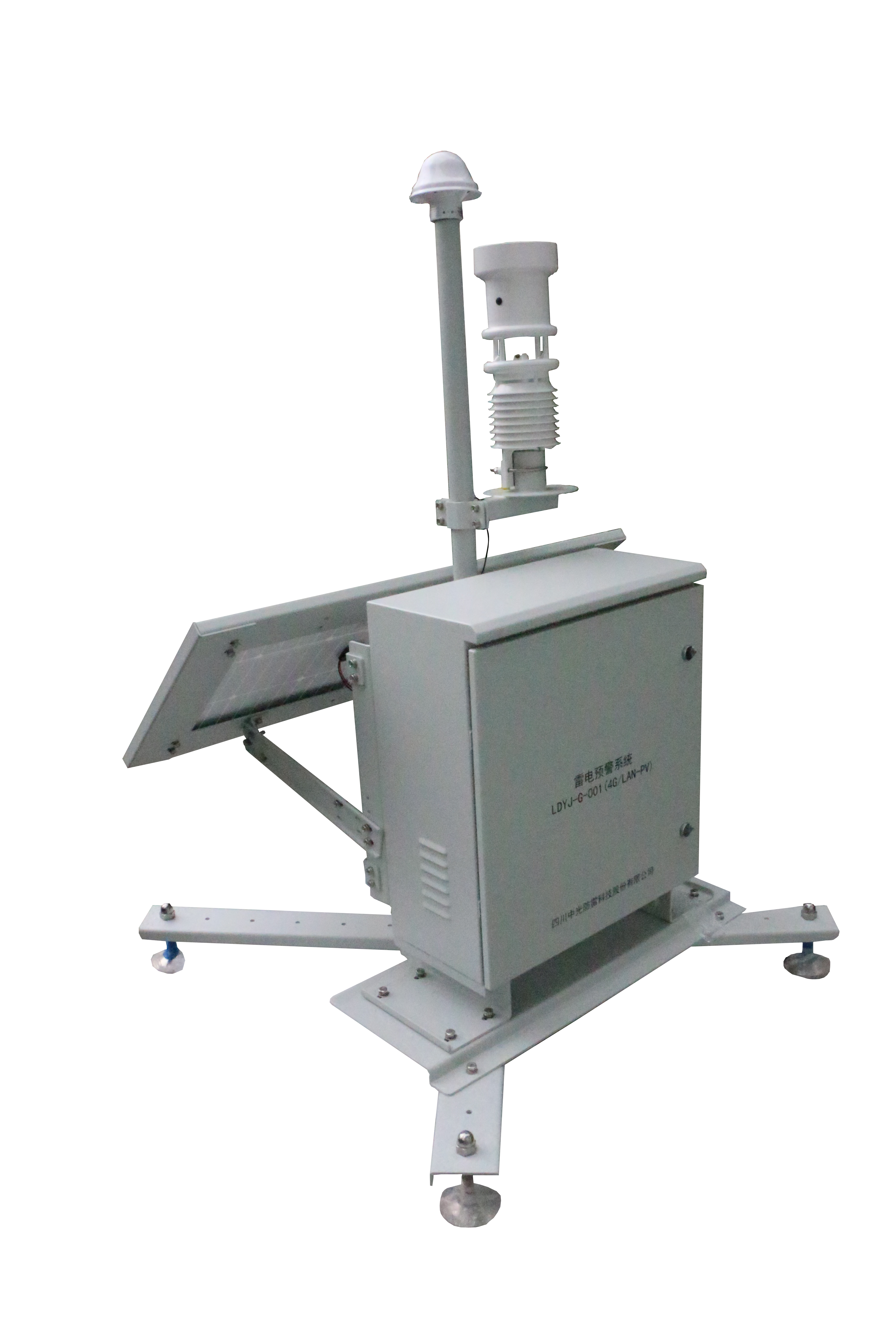
Lightning Warning System
General
By using the MEMS electric field sensor to capture changes of atmospheric electric field, the lightning warning system can predict upcoming thunderstorms and their progression accurately in a timely manner. Within 30 minutes before a thunderstorm arrives, the lightning warning system gives out warning within 20 km where the system is installed. Warning messages reach related personnel by communication devices and outdoor alarm systems. This allows the user to respond immediately according to the contingency plan so as to avoid personnel casualty and equipment damage as well as minimize the hazard and lower down economic loss.
Meanwhile, electric field data recorded by the lightning monitoring software both routinely and during thunderstorms provides valuable raw data for meteorological research, especially the research on thunderstorms.
Operating Environment
|
Power supply
|
AC 220 V ±22 V, DC 6-12 V
|
|
Temperature range
|
–20°C to 70°C
|
|
Relative humidity range
|
≤ 95%
|
|
Atmospheric pressure and altitude
|
86 kPa to 106 kPa
|
Product Configuration (Standard)
|
Item
|
Qty
|
Unit
|
Remarks
|
|
Lightning warning system
|
1
|
Set
|
/
|
|
Monitoring system software
|
1
|
Set
|
Optional, one set for each project
|
Performance Indicators
|
Item
|
Specification
|
|
Measurement range
|
–50 kV/m to 50 kV/m
|
|
Electric field resolution
|
≤ 0.02 kV/m
|
|
Lightning warning range
|
≤ 20 km
|
|
Warning time
|
≤ 30 minutes
|
|
Response time
|
1 s
|
|
Total uncertainty
|
≤ 2%
|
|
Communication mode
|
RS485, Ethernet, GPRS, LORA
|
|
Waterproof rating
|
IP 65
|
|
System average power consumption
|
≤ 3 W
|
Standard Complied
GBT38121-2019 Protection against lightning—Thunderstorm warning systems.
GB/T 35086-2018 General specification for MEMS electric field sensor.
GB/T 18459-2001 Methods for calculating the main static performance specifications of transducers.
QXT 262—2015 Technical guidelines for lightning nowcasting and warning.
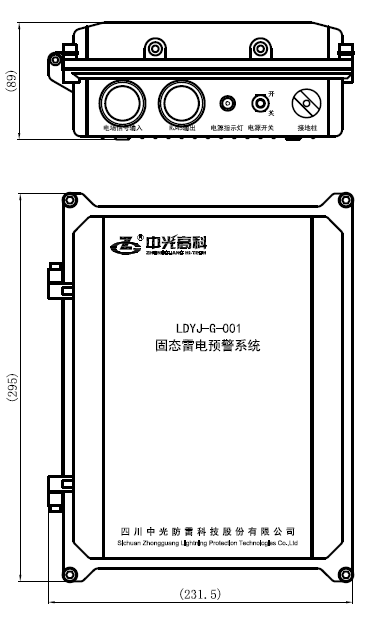
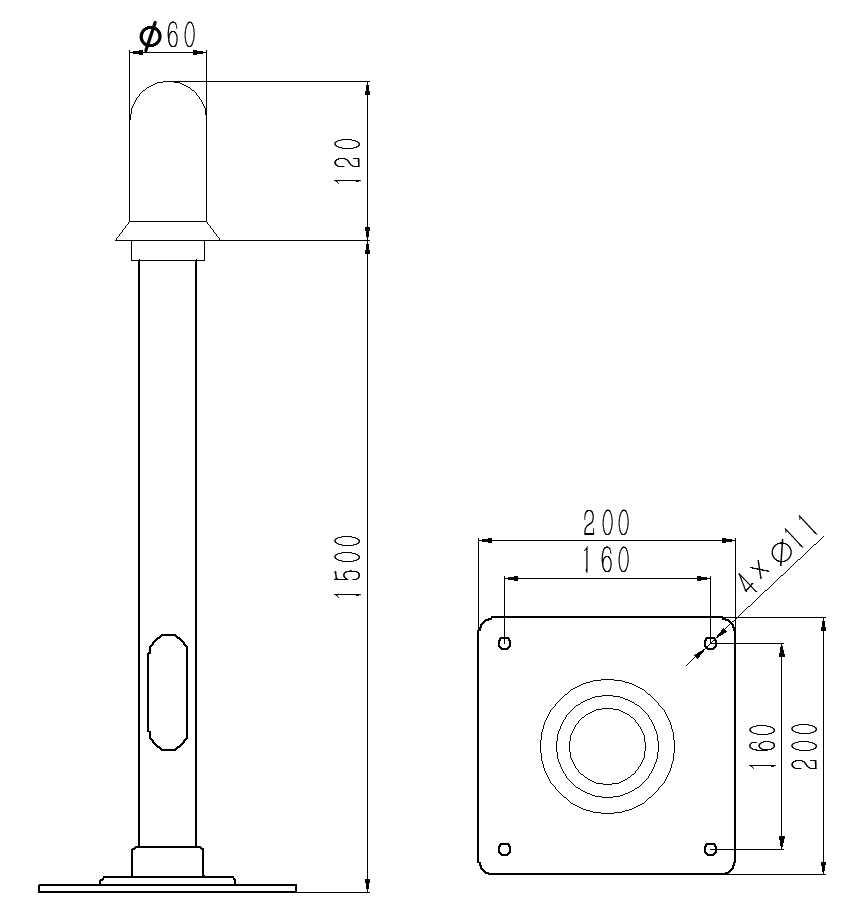
Exterior and Dimensions
Host Sensor
Working Principles
What is lightning?
Electric discharge between clouds or between clouds and the ground when thunderclouds accumulate enough electric charge.
Why lightning can be monitored?
Electric field strength and change rate are monitored because electric effect exists throughout the whole lifecycle of lightning. The atmospheric electric field change of a cloud can be monitored as long as electric charge is present in the cloud. This allows evaluation of electric charge volume and determination of lightning occurrence.
How does the lightning warning system work?
Based on physical measurement and analysis theories on atmospheric electrostatic field, the lightning warning system introduces scientific measurement methods, high-performance data processing, and analysis software to process and analyze atmospheric electric change in the target area. With reference to appropriate mathematical model, the system can accurately predict and report upcoming thunderstorms, and provide preventive measures to reduce lightning hazards, human injuries, and equipment damage.
By monitoring and analyzing the electric field strength and change rate, the lightning warning system monitors the movement of thunderclouds, and identifies and gives warning to possible thunder attacks.
According to monitoring data captured in multiple meteorological observation stations nationwide, throughout the year, sunny days have more obvious daily change of electric field than average annual level. Specifically, the electric field is generally 40% greater than the average daily value. There is reasonable mapping between the occurrence of thunder and the quick jitter of an electric field mill.
The system provides three warning levels with varied thresholds depending on the changing characteristics of electric field and the response of electric field to the lightning process.
Functions and Features
Wide measurement range, fast response
Strong resistance to moisture, high stability, long life span, reliable performance
Compact size, high spatial resolution, low power consumption
Both single spot detection and multi-point area detection via wireless network supported
Yellow-orange-red audible and visual alarm to upcoming thunder based on hazard severities
Real-time display of information such as field strength on a client
Information storage provided, with storage period over 1 year, facilitating query of historical data and data analysis, Remote modification of alarm threshold is supported to reduce thunder misdeclaration based on historical data analysis result